
Future Science
Future Habitats: Materials, Energy, and Human Factors
Long-duration habitats require a systems approach that joins structural engineering, life support, power, radiation protection, maintenance, and human wellbeing.
Read Full Study →Elonx LLC explores the engineering and science behind space exploration, rocket fuel and launch systems, missions to Mars and Jupiter, AI research, robotics, nanotechnology, microbiology, and advanced ship-and-cargo technologies.
Explore Studies →Discover Research ↗ Space Exploration →
 AI & Robotics →
 Mars & Jupiter →
 Nanotechnology →
 Microbiology →
 Auctions →
 Ship & Cargo →
 Space Technology →
 Future Science →
 Research & Ethics →
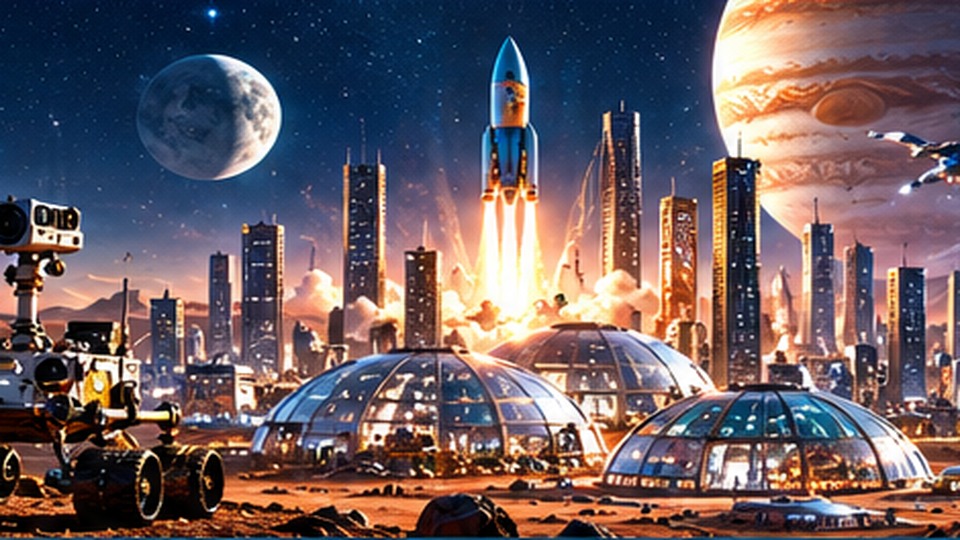
Long-duration habitats require a systems approach that joins structural engineering, life support, power, radiation protection, maintenance, and human wellbeing.
Read Full Study →
Historic scientific instruments can preserve engineering knowledge and make the history of discovery tangible, but responsible collecting requires careful documentation.
Read Full Study →
A mission supply chain must deliver the right equipment at the right time while accounting for launch limits, long lead times, and no rapid resupply option.
Read Full Study →
Space memorabilia can include signed materials, mission patches, photographs, equipment, models, and objects claimed to have flown in space. Authenticity depends on documented evidence rather than visual appeal…
Read Full Study →
Reducing shipping emissions requires a combination of vessel efficiency, route optimisation, cleaner energy, port infrastructure, and transparent lifecycle accounting.
Read Full Study →
Automation can assist cargo ships with route planning, machinery monitoring, collision alerts, and port coordination, but maritime safety depends on reliable systems and clear human responsibility.
Read Full Study →
A biosignature is a measurable feature that may indicate life, but many biological-looking signals can also arise through non-biological processes.
Read Full Study →
Closed habitats recycle water and air, grow food, and bring people into contact with many surfaces; microbial monitoring is therefore part of life-support engineering.
Read Full Study →
Miniaturised sensors can help detect small concentrations of chemicals or biological markers in constrained environments.
Read Full Study →
Nanostructured materials can change how surfaces interact with light, heat, particles, and chemicals, creating possible benefits for spacecraft and scientific instruments.
Read Full Study →
Europa, Ganymede, and Callisto offer different environments for studying water, chemistry, energy, and the limits of habitability.
Read Full Study →
Jupiter’s moon Europa is a major astrobiology target because multiple observations support the possibility of a salty ocean beneath its icy crust.
Read Full Study →
Terraforming means changing a planet’s environment on a global scale; for Mars, the gap between concept and demonstrated capability is enormous.
Read Full Study →
Food production on Mars would need tightly controlled light, water, nutrients, temperature, atmosphere, and microbial conditions.
Read Full Study →
A permanent Mars outpost would be a complex life-support and logistics system, not simply a collection of habitats placed on the surface.
Read Full Study →
Robotic manipulators can inspect satellites, move equipment, assemble structures, and support future in-space servicing.
Read Full Study →
Planetary rovers combine mobility, perception, navigation, science instruments, and fault management in environments that cannot be repaired easily.
Read Full Study →
Onboard autonomy can help spacecraft respond to changing conditions when Earth is too far away for rapid intervention.
Read Full Study →
Modern observatories produce enormous datasets; AI can help prioritise observations and detect patterns that would be difficult to find manually.
Read Full Study →
A spacecraft travelling far from Earth must determine its position and velocity while operating with delayed, limited communication.
Read Full Study →Every study separates established evidence from active research and future concepts, highlights technical constraints, and encourages readers to consult original scientific publications. Editorial illustrations support learning but are not documentary evidence.